Contents
Other Names and Customs of Jinjitsu
The History of Jinjitsu
Seven-Herb Rice Porridge (Nanakusa-gayu)
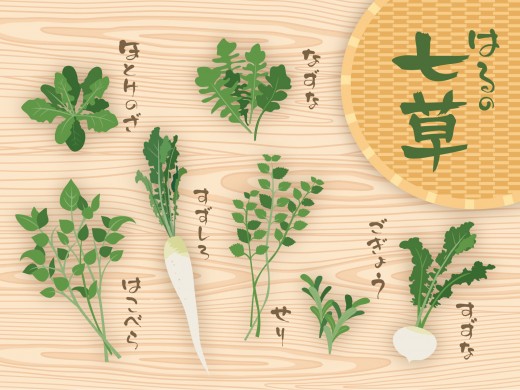
Jinjitsu is also known as the “Festival of Seven Herbs (Nanakusa-no Sekku)”.
After the busy New Year celebrations from January 1st, this day—January 7th—marks the final event of the holiday season in Japan.
People eat a special rice porridge with seven kinds of spring herbs called nanakusa-gayu, hoping for good health and a fruitful year ahead.
The word Jinjitsu (literally “Human Day”) comes from ancient China, during the Han Dynasty.
At that time, the first seven days of the year were each associated with a different creature:
• January 1st: Day of the Rooster
• January 2nd: Day of the Dog
• January 3rd: Day of the Pig
• January 4th: Day of the Sheep
• January 5th: Day of the Ox
• January 6th: Day of the Horse
• January 7th: Day of Humans (Jinjitsu)
Each day had its fortune-telling rituals, and people avoided harming the animals associated with that day. On the seventh day, punishments were suspended in respect of human life.
Later, during the Tang Dynasty, people began eating a warm soup made with seven kinds of young greens, called “seven-vegetable soup” (七種菜羹, nanashu-sai-no-kan), to wish for health and longevity.
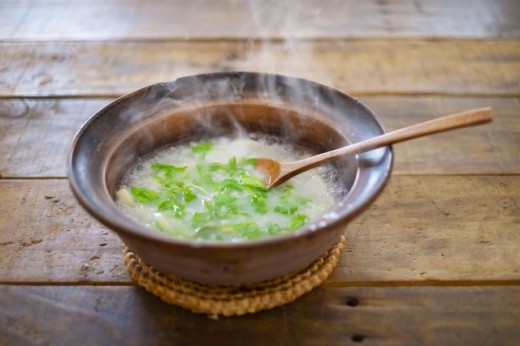
When this tradition came to Japan during the Nara period (8th century), it blended with local customs such as “wakakusa-tsumi” (gathering fresh greens at the start of the year to gain vitality), and “nanakusa-gayu”, a porridge made with seven grains.
Over time, these practices merged into the modern custom of eating nanakusa-gayu—rice porridge made with seven specific spring herbs—on January 7th.
This gentle dish is not only nutritious, but also believed to rest the stomach after holiday feasts and bring good health for the year ahead.
Category : Japanese Culture , text @en
Tag : 24 divisions of the solar year , 24sekki , corona virus , COVID-19 , COVID19 , Emergency , Japanese culture , season , tanabata , The coronavirus , 日本の文化
Recommended for you

Jinjitsu-no Sekku (人日の節句)
Jan. 07, 2021

Popular post


Doyo-no Ushi-no Hi (土用の丑の日)
~ July 19th & 31st in 2025 ~
Mar. 18, 2025